Dehydration in dogs happens when your pet loses more fluid than they take in, and it can go from mild to dangerous faster than most owners expect — especially during Georgia’s hot, humid summers. Knowing the early warning signs can help you catch the problem before it becomes an emergency. If you ever have questions about your dog’s health, our team at Boulevard Animal Hospital is always happy to help.
What Causes Dehydration in Dogs?
Dogs lose fluids through panting, urination, and normal body processes, and they normally replace those fluids by drinking water and eating food. Dehydration sets in when that balance is disrupted. Common causes include:
- Heat exposure: Extended time outdoors in hot weather, especially without shade or water access
- Vomiting or diarrhea: Illness that causes fluid loss faster than a dog can replace it
- Reduced water intake: Dogs who are sick, stressed, or unfamiliar with a new water source may drink less than usual
- Fever: Illness-related fever increases fluid loss
- Underlying disease: Kidney disease, diabetes, and other chronic conditions can affect hydration status
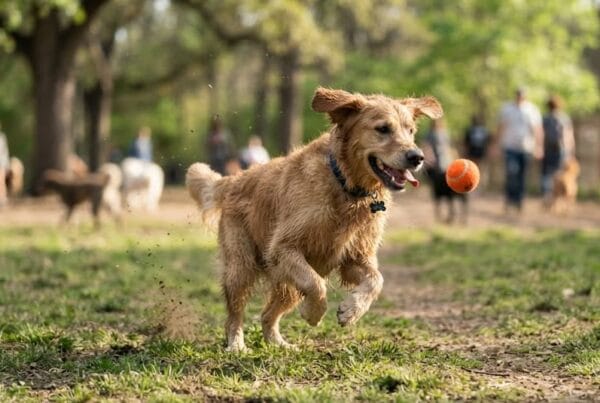
- Overexertion: Long hikes, runs, or play sessions, particularly in warm weather
- Parasites and warm-weather illness: Mosquito- and flea-borne conditions like heartworm can also strain a dog’s health during the hotter months — read more in our guide to heartworm prevention
Signs of Dehydration in Dogs
Watch for these warning signs, which can range from subtle to severe:
- Dry or tacky gums (healthy gums should feel moist and slippery)
- Loss of skin elasticity — gently pull up the skin between the shoulder blades; in a hydrated dog it should snap back quickly, while in a dehydrated dog it stays tented
- Sunken-looking eyes
- Lethargy or weakness
- Loss of appetite
- Thick, ropey saliva
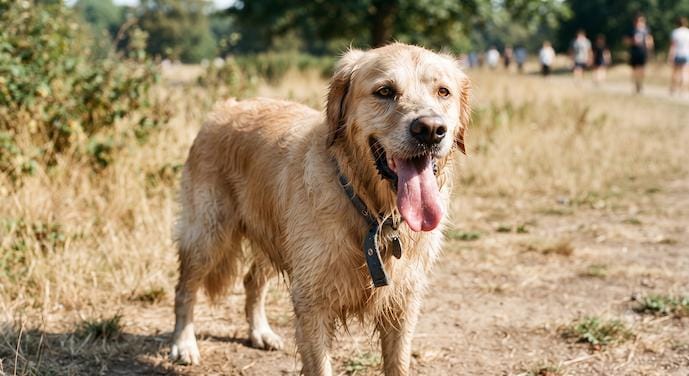
- Panting that doesn’t let up
- Dark yellow urine or reduced urination
The American Kennel Club notes that puppies, senior dogs, nursing mothers, and toy breeds face a higher risk of dehydration, so it’s worth watching these dogs a little more closely.
The Skin Tent Test
One of the easiest ways to check hydration at home is the skin tent test. Gently pinch and lift the skin at the back of your dog’s neck or between the shoulder blades, then let go. In a well-hydrated dog, the skin should return to its normal position almost immediately. If it stays tented or returns slowly, your dog may be dehydrated and should be evaluated.
What to Do If You Suspect Dehydration
For mild cases — a dog who’s been out in the heat and is a little sluggish but otherwise acting normal — move them to a cool area and offer small amounts of water frequently rather than letting them gulp a large bowl at once. Avoid ice-cold water, which can cause stomach upset.
For moderate to severe dehydration, especially if it’s linked to vomiting, diarrhea, heatstroke, or your dog is lethargic and won’t drink, this is a job for a veterinarian. Dogs with significant fluid loss often need subcutaneous or IV fluids to recover safely, and delaying treatment can allow the condition to progress to organ damage or shock. Our team offers hospitalization and IV fluid therapy for pets who need close monitoring and more intensive rehydration support.
When to See a Vet Right Away
Bring your dog in immediately if you notice:
- Persistent vomiting or diarrhea
- Collapse or extreme weakness
- Gums that are pale, dry, or tacky
- Signs of heatstroke (heavy panting, drooling, disorientation, bright red gums)
- Refusal to drink water for an extended period
The American Veterinary Medical Association points out that first aid at home is never a substitute for veterinary care — it can only buy time until your dog is seen. If you’re ever unsure whether your dog’s symptoms warrant a visit, it’s always safer to contact Boulevard Animal Hospital and ask.
Preventing Dehydration in Dogs
- Keep fresh water available at all times, both indoors and outdoors
- Bring water on walks, hikes, or trips to the dog park, especially in summer
- Limit outdoor activity during peak heat hours
- Watch senior dogs and dogs with chronic illness closely, as they’re more prone to dehydration
- Add wet food or bone broth to boost fluid intake if your dog is a light drinker
The AVMA’s warm weather pet safety guidance also recommends avoiding walks, runs, or hikes during the hottest parts of the day and taking frequent water breaks when you do head outside. Cornell’s Riney Canine Health Center adds that dogs need extra time to acclimate to rising temperatures in early summer, so it’s worth easing into warmer-weather exercise rather than jumping straight into a long hike on the first hot day.
Frequently Asked Questions
How can I tell if my dog is dehydrated?
Check for dry or tacky gums, loss of skin elasticity (the skin tent test), sunken eyes, and lethargy. If the skin doesn’t snap back quickly when gently pinched, your dog may be dehydrated.
Can I rehydrate my dog at home?
Mild dehydration can often be managed at home by offering small, frequent amounts of water in a cool environment. Moderate to severe dehydration, or dehydration linked to vomiting, diarrhea, or heatstroke, needs veterinary care and possibly IV or subcutaneous fluids.
How long can a dog go without water before becoming dehydrated?
Dogs can begin showing signs of dehydration within 24 hours of no water intake, and the risk increases significantly in hot weather or with high activity levels. According to AAHA, dehydration risk climbs sharply once a dog is also dealing with heat stress, so hot-weather days call for extra vigilance.
Is dehydration in dogs an emergency?
It can be. Severe dehydration, especially from heatstroke or ongoing vomiting and diarrhea, can lead to organ damage and shock if untreated. When in doubt, contact your veterinarian.
For more helpful articles on keeping your pet healthy year-round, browse our full blog.