Do Fleas Survive in Winter? What Athens Pet Owners Need to Know
Last Updated: March 2026 | Boulevard Animal Hospital, Athens, GA
Many Athens pet owners mistakenly believe that winter temperatures eliminate the need for flea prevention, so the question is, do fleas survive in winter? While Georgia’s winter months bring cooler weather, fleas remain a year-round concern for dogs and cats in the South. Understanding how fleas survive cold temperatures can help protect your pet from infestations, skin irritation, and parasitic diseases even during winter.
How Temperature Affects Flea Populations
Quick Answer: No, fleas do not die in winter in Athens, Georgia. While prolonged freezing temperatures can kill adult fleas, Athens winters rarely stay cold enough long enough to eliminate flea populations. Fleas survive winter by living indoors on pets, in bedding and carpets, and in the warm burrows of wildlife.
Fleas can survive in temperatures as low as 46°F, and it takes 5 consecutive days of temperatures below freezing to kill adult fleas. In Athens, winter highs typically reach the mid-50s, creating ideal conditions for fleas to remain active. When your dog visits local parks like Memorial Park or Southeast Clarke Park where winter temperatures rarely drop below 30°F for extended periods, they can still pick up fleas from the environment or from wildlife.
Indoor environments maintain temperatures well above 46°F year-round, meaning any fleas that enter your home on your pet will continue reproducing regardless of outdoor weather conditions.
Can Fleas Lay Dormant During Winter?
Quick Answer: Yes, flea larvae and pupae can remain dormant for up to five months during winter. Adult fleas can survive without feeding for up to 100 days, allowing them to persist through cold periods until conditions improve.
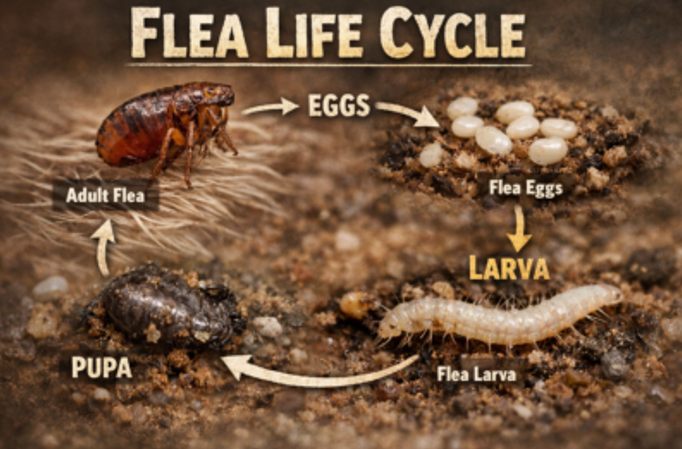
The flea life cycle includes four stages: egg, larva, pupa, and adult. While only 5-10% of fleas in an environment are visible adult fleas, the remaining 90-95% exist as eggs, larvae, and pupae hidden in carpets, furniture, and pet bedding. This hidden majority can survive winter in a dormant state.
[OUTBOUND LINK: Link to veterinary parasitology journal or university extension article on flea life cycles]
Flea larvae don’t require a blood meal to survive—they feed on organic debris in their environment, including the feces of adult fleas. Unhatched flea larvae can remain dormant in their cocoons until environmental conditions signal that a host is nearby, including:
- Vibrations from foot traffic
- Increases in carbon dioxide levels
- Rising temperatures
This dormancy mechanism means that even if you don’t see fleas on your pet during winter, a dormant population may be waiting in your home environment.
How to Check Your Pet for Fleas
What Temperature Kills Fleas?
Quick Answer: Adult fleas die after 5 consecutive days of temperatures below 32°F (freezing). However, temperatures between 46°F and 33°F slow flea reproduction but don’t kill established populations. Athens winters rarely sustain freezing temperatures long enough to eliminate outdoor flea populations.
Flea survival at different temperatures
Here’s how temperature affects flea survival:
| Temperature Range | Effect on Fleas | Athens Winter Reality |
|---|---|---|
| Above 46°F | Optimal survival and reproduction | Common in Athens (winter highs 50-60°F) |
| 33-46°F | Slowed activity, survival rate 10-20 days | Occasional nighttime lows |
| Below 32°F for 5+ days | Adult flea death | Rare in Athens |
| Indoor temperature (68-72°F) | Ideal breeding conditions year-round | Your home environment |
Even during Athens’ coldest winter days, your pet’s body temperature (100-102.5°F) provides a warm microclimate for fleas to thrive. Additionally, wildlife such as raccoons, opossums, and feral cats maintain year-round flea populations in their warm burrows and nests, serving as reservoirs that can reinfest your pet.
Do Indoor Cats Need Flea Prevention in Winter?
Quick Answer: Yes, indoor cats need year-round flea prevention in Athens. Fleas can enter homes through doors, windows, other pets, or on human clothing. Once inside, they reproduce rapidly in the warm indoor environment regardless of outdoor temperatures.
Indoor cats face flea exposure from several sources:
- Other household pets that go outdoors can bring fleas inside
- Wildlife near entry points such as porches, garages, or crawl spaces
- Human transmission on shoes, clothing, or bags
- Used furniture or rugs that may harbor flea eggs or larvae
A single pregnant flea can lay up to 50 eggs per day. In your climate-controlled home, those eggs can develop into biting adults within 2-3 weeks, creating an infestation before you notice the first flea.
What About Intestinal Parasites in Winter?
Quick Answer: Intestinal parasites including roundworms, hookworms, and whipworms remain active year-round in Athens. Unlike fleas, these parasites are not killed by cold temperatures because their eggs and larvae persist in soil, and pets can contract them simply by walking outdoors and grooming their paws.
Georgia’s mild winters don’t kill intestinal parasite eggs in the environment. Your pet can contract these parasites by:
- Walking on contaminated soil or grass
- Licking their paws after outdoor walks
- Investigating areas where wildlife has defecated
- Drinking from puddles or standing water
Most monthly flea preventatives also protect against intestinal parasites, making year-round prevention essential for comprehensive parasite control. These combination preventatives typically protect against:
- Heartworms (transmitted by mosquitoes, which can be active year-round in heated structures)
- Roundworms
- Hookworms
- Whipworms
- Fleas
- Ticks (also active during warm winter days in Georgia)
When Should I Give My Dog Flea Prevention?
Quick Answer: Dogs in Athens, Georgia need flea prevention every month of the year, including winter. Year-round prevention is more effective and cost-efficient than treating infestations, which can cost hundreds of dollars and cause significant discomfort for your pet.
Skipping flea prevention during winter months creates several problems:
- Dormant populations can emerge – Pupae in your home may hatch when prevention lapses
- Resistance development – Inconsistent prevention can contribute to flea resistance to medications
- Missed protection against other parasites – Most flea preventatives also prevent heartworms and intestinal parasites
- Cost of infestation treatment – Treating a home infestation costs significantly more than preventative medication
Comparison: Prevention vs. Treatment Costs
| Scenario | Approximate Cost |
|---|---|
| Year-round flea prevention (dog) | $120-200/year |
| Treating a flea infestation | $300-600 (includes home treatment, multiple vet visits, medications) |
| Treating flea allergy dermatitis | $150-500+ per occurrence |
Year-round prevention protects your pet, your home, and your wallet.
What Flea Prevention Should I Use for My Pet?
Quick Answer: The best flea prevention for your pet depends on their species, weight, lifestyle, and health status. Effective options include monthly topical treatments, oral medications, and long-acting injections. Your veterinarian can recommend the most appropriate product for your individual pet.
Modern flea preventatives offer several delivery methods:
Topical (applied to skin):
- Monthly application
- Often includes tick prevention
- Some also prevent heartworms and intestinal parasites
- Examples include products containing fipronil, selamectin, or imidacloprid
Oral (pills or chewables):
- Monthly or quarterly dosing options
- Fast-acting (some kill fleas within 30 minutes)
- No messy application or bathing restrictions
- Examples include products containing spinosad, nitenpyram, or afoxolaner
Injectable (for cats):
- Administered by veterinarian
- Lasts 6 months
- Eliminates need for monthly administration
- Convenient for cats who resist medication
Important: Never use dog flea prevention on cats. Some ingredients safe for dogs (such as permethrin) are highly toxic to cats and can cause seizures or death.
Are Natural Flea Prevention Methods Effective?
Quick Answer: Natural flea prevention methods including essential oils, garlic, brewer’s yeast, and diatomaceous earth are not proven effective and may be harmful to pets. Veterinarian-prescribed flea preventatives undergo rigorous safety and efficacy testing, making them the most reliable choice for parasite control.
While natural alternatives may seem appealing, scientific evidence doesn’t support their effectiveness:
Essential oils (tea tree, eucalyptus, peppermint):
- Can be toxic to cats and dogs
- Not proven effective at preventing or killing fleas
- May cause skin irritation, respiratory distress, or neurological symptoms
Garlic or brewer’s yeast:
- No scientific evidence of flea-repelling properties
- Garlic can be toxic to pets in large amounts
- May cause gastrointestinal upset
Diatomaceous earth:
- May kill some fleas on contact through dehydration
- Respiratory irritant for both pets and humans
- Does not prevent new fleas from infesting your pet
- Ineffective against flea eggs and larvae
If you’re concerned about medication side effects, discuss your concerns with your veterinarian. Modern flea preventatives have excellent safety profiles when used as directed, with serious side effects being rare.
Frequently Asked Questions About Winter Flea Prevention
Can my pet get fleas from wildlife in winter?
Yes. Raccoons, opossums, feral cats, and other wildlife maintain flea populations year-round in their warm burrows and nests. Your pet can pick up fleas when exploring areas these animals frequent, even during winter months.
How do I know if my pet has fleas in winter?
Signs of flea infestation include excessive scratching, hair loss (especially near the tail base), tiny black specks in the fur (flea dirt), red or irritated skin, and seeing actual fleas. Some pets develop flea allergy dermatitis, causing severe itching from even a single flea bite.
What should I do if I find fleas on my pet during winter?
Contact your veterinarian immediately to start effective flea treatment. You’ll also need to treat your home environment including washing all bedding, vacuuming thoroughly, and potentially using premise sprays or hiring professional pest control services.
Can fleas transmit diseases to my pet?
Yes. Fleas can transmit tapeworms, Bartonella (cat scratch disease), and Mycoplasma. Heavy flea infestations can also cause anemia, especially in young, elderly, or small pets.
Is it safe to stop flea prevention if I haven’t seen fleas?
No. The majority of fleas (90-95%) exist as eggs, larvae, and pupae that aren’t visible. By the time you see adult fleas, an infestation is already established. Year-round prevention stops infestations before they start answering the question, Do fleas survive in the winter?
Protect Your Pet Year-Round in Athens
Winter in Athens, Georgia doesn’t eliminate flea populations—it just slows them down. With mild temperatures, active wildlife, and warm indoor environments, fleas remain a threat to your pet’s health and comfort throughout the year. Year-round flea prevention protects against fleas, ticks, heartworms, and intestinal parasites while saving you the cost and hassle of treating infestations.
Our team at Boulevard Animal Hospital can help you choose the most effective flea prevention for your pet’s individual needs. Contact us today to discuss parasite prevention options and keep your pet healthy through every season.