Three Simple Steps to Clean Your Dog’s Ears
How to Clean Your Dog’s Ears at Home: A Complete Guide
Routine ear care is considered one of the most important — and most overlooked — aspects of a dog’s overall health. Regular cleaning is especially important for breeds that are prone to allergies or recurring infections, such as Cocker Spaniels, Basset Hounds, Labrador Retrievers, and Poodles. When ear hygiene is kept up consistently, inflammation is reduced, and bacteria and yeast are prevented from taking hold.
That said, certain symptoms should never be addressed with at-home cleaning alone. If a foul odor is noticed, unusual discharge is present, visible redness is observed, or problems return shortly after a cleaning, a veterinary appointment should be scheduled promptly. These signs may indicate an infection that requires professional treatment.
What Is Needed Before Getting Started
Before the first step is taken, a few supplies should be gathered:
- A veterinarian-approved ear cleaning solution — this is the most important item. Purpose-made solutions are designed to gently break down wax and debris without irritating the delicate tissues of the ear canal.
- Cotton balls or gauze squares — these are used to wipe away loosened debris and excess solution.
- Treats — pairing each cleaning session with something positive goes a long way toward making the experience stress-free for both dog and owner.
An extra set of hands is also helpful for dogs that don’t stay still during handling.
What Should NOT Be Used to Clean a Dog’s Ears
A common question is whether hydrogen peroxide can be used to clean a dog’s ears. The answer is no — and this is worth understanding clearly.
Hydrogen peroxide should not be used in a dog’s ear. While it may seem like a reasonable home remedy for an ear infection, hydrogen peroxide can cause irritation to the sensitive skin lining the ear canal. In dogs with existing inflammation or broken skin — which is common in infected ears — the use of hydrogen peroxide can make the condition significantly worse rather than better.
Similarly, alcohol-based products and cotton swabs should be avoided entirely. Cotton swabs push debris deeper into the ear canal rather than removing it, and alcohol causes painful irritation to already-sensitive tissue.
If an ear infection is suspected, the appropriate step is to contact a veterinarian rather than attempting to treat it at home.
What Ear Cleaning Solution Should Be Used for Dogs
A veterinarian-approved ear cleaning solution is the safest and most effective option. These solutions are specifically formulated to dissolve wax and debris, dry the ear canal after cleaning, and avoid disrupting the natural environment of the ear.
Common ingredients found in quality ear cleaning solutions include salicylic acid, lactic acid, and gentle surfactants. Many are available through veterinary offices or pet supply stores.
For pet owners in Athens, GA, the team at Boulevard Animal Hospital is happy to recommend a specific product based on your dog’s breed, ear shape, and history of ear problems.
What about home remedies for cleaning dogs’ ears?
Some sources suggest using diluted apple cider vinegar or witch hazel as natural ear cleaning options. While these may have mild antimicrobial properties, they are not recommended by most veterinarians. They can still cause irritation, and they do not provide the same consistent, safe results as a properly formulated cleaning solution. When in doubt, the veterinarian-recommended product is always the better choice.
How to Clean Your Dog’s Ears: Step-by-Step
Step 1: Apply the Cleaning Solution
The ear flap is gently held back to expose the ear canal opening. A liberal amount of the cleaning solution is poured directly into the ear canal — enough that a soft squelching sound is heard when the base of the ear is massaged. That sound indicates that sufficient solution has been worked into the canal.
The base of the ear is then massaged gently for 20–30 seconds. This motion helps loosen debris that has collected deep in the canal and brings it toward the surface.
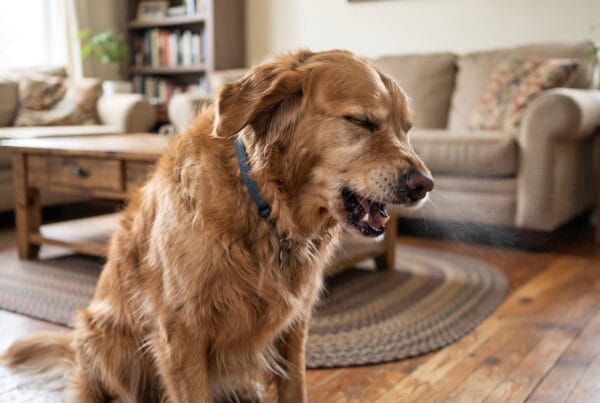
The dog should then be allowed to shake their head naturally. This is an important part of the process — the shaking motion helps bring loosened debris out of the canal. Eye protection for the person doing the cleaning is advised at this point.
Step 2: Wipe Away Debris
A cotton ball or gauze square is wrapped around a finger and used to wipe out the visible portion of the ear canal. The finger can safely be inserted as far as it will comfortably reach — the anatomy of a dog’s ear canal makes it virtually impossible to cause damage this way.
The goal at this step is to remove loosened debris and excess solution. The ear should be wiped gently but thoroughly.
Step 3: Repeat Until Clean
Steps 1 and 2 are repeated as needed until the cotton ball or gauze comes away without significant discoloration or debris. At that point, the ear is considered clean.
The same process is then repeated on the other ear.
How Often Should a Dog’s Ears Be Cleaned?
For most dogs, once a month is a reasonable baseline. However, dogs that swim frequently, have floppy ears, or have a history of ear infections may benefit from more frequent cleanings — sometimes as often as once a week.
The right cleaning schedule depends on the individual dog. A veterinarian can help determine the appropriate frequency based on breed, ear structure, and health history.
Signs That a Vet Visit Is Needed Instead of a Cleaning
At-home ear cleaning is a preventive measure, not a treatment for infection. A veterinary appointment should be scheduled rather than a home cleaning performed if any of the following are present:
- A strong or unpleasant odor coming from the ear
- Dark brown or black discharge
- Yellow or green discharge
- Visible redness or swelling inside the ear flap or canal
- The dog is scratching at the ear excessively or shaking its head frequently
- Pain or sensitivity when the ear is touched
- Symptoms that return shortly after cleaning
These signs suggest a bacterial or yeast infection, ear mites, or another condition that requires diagnosis and treatment by a veterinarian.
Professional Ear Cleaning at Boulevard Animal Hospital in Athens, GA
For pet owners who prefer to have the cleaning handled professionally, or who have a dog that makes at-home cleaning difficult, professional ear cleaning is available at Boulevard Animal Hospital in Athens, Georgia.
The team at Boulevard is also happy to walk clients through the at-home process in person, recommend the right cleaning solution for a specific dog, and evaluate whether any underlying ear issues need to be addressed.
To schedule an appointment or ask questions, call (706) 425-5099 or use the online booking option on the website.
This article is intended for general informational purposes. It is not a substitute for professional veterinary advice. If ear infection or injury is suspected, a veterinarian should be consulted before attempting any at-home treatment.